⚡ How to Calculate Nagaland Electricity Bill - Quick Answer
Nagaland domestic electricity bill 2026 (DoPN, regulated by NERC) uses a 3-slab telescopic tariff: ₹3.35/unit for the first 100 units, ₹5.50/unit for the next 200 units (101-300), and ₹7.00/unit beyond 300 units. Your total bill adds a ₹60/kW fixed charge, a ₹10 Public Lighting Charge, and a 5% electricity duty on energy charges. Use the calculator below for an instant result.
Nagaland Electricity Bill Calculator
Enter your monthly electricity consumption in units (kWh) and select your connection type. DoPN/NERC Nagaland tariff - telescopic slabs starting at just ₹3.35/unit for domestic consumers! The calculator instantly shows a full breakdown with charts.
Enter Your Details
🪷 DoPN/NERC Tariff 2026 - Kohima · Dimapur · Mokokchung · Kiphire
Your Bill Breakdown
⛰️ Kohima · 🌾 Dimapur · 🏞️ Mokokchung
Bill Breakdown Charts
Beat the Heat Without Spiking Your Nagaland Bijli Bill
Ceiling fans and coolers quietly add units every summer. A low-wattage pedestal fan gives full airflow at a fraction of the running cost — here's the one Nagaland readers are buying right now.
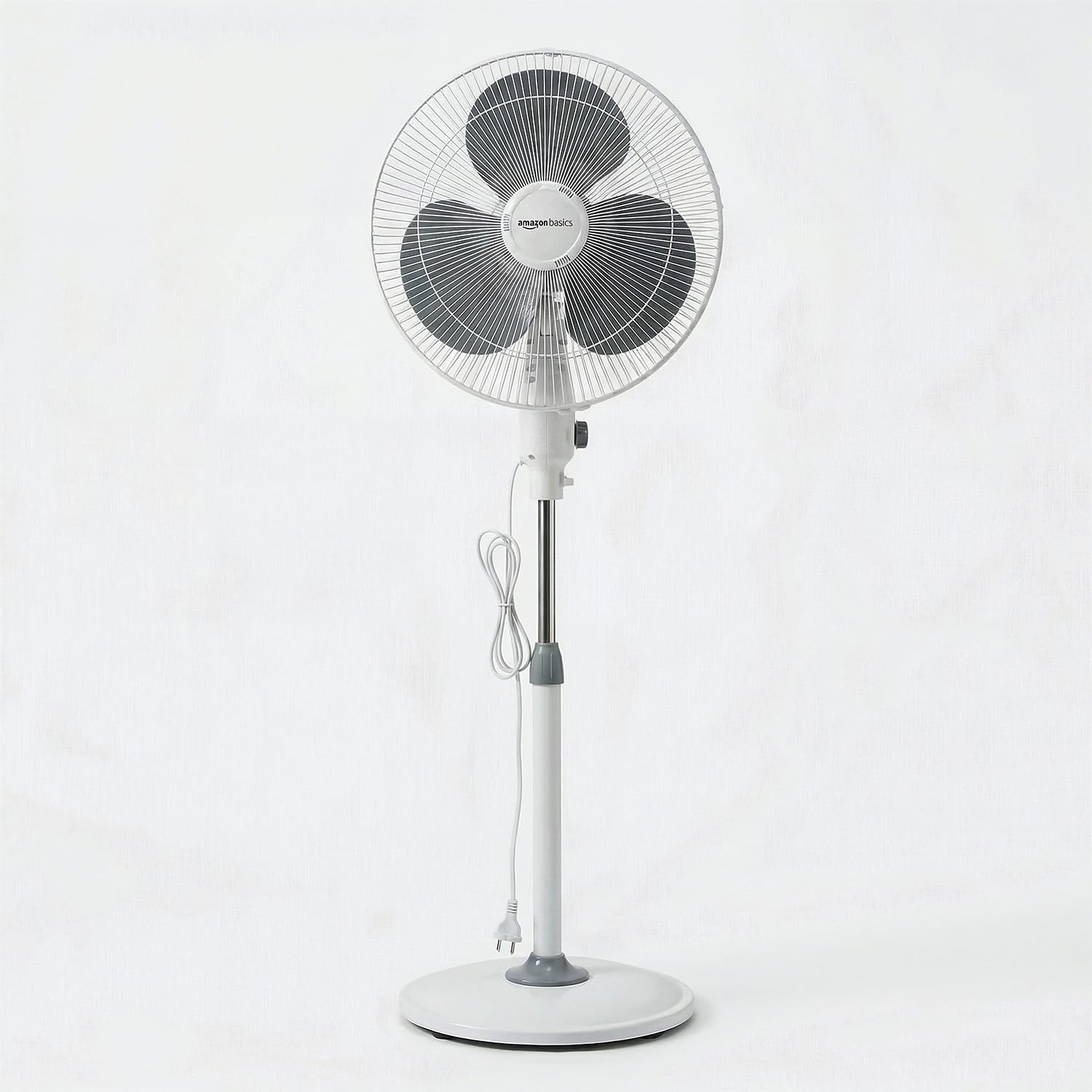
16-Inch Pedestal Fan | Tilting Head | 1400 RPM | Silent Operation | 400mm Sweep (Grey)
- ✅ Tilting head for adjustable airflow
- ✅ 1400 RPM — strong yet silent operation
- ✅ 400mm sweep for whole-room cooling
- ✅ Runs on a fraction of an AC's or cooler's units
Which Power Circle Serves Your District in Nagaland?
Unlike many states, Nagaland does not have separate DISCOM companies - electricity is generated, transmitted and distributed directly by the Department of Power, Government of Nagaland (DoPN), with tariffs approved by the Nagaland Electricity Regulatory Commission (NERC). Billing and field operations are organised into circles. All 16 districts of Nagaland are covered under one unified tariff.
DoPN - Dimapur (Commercial Hub) Circle
Covers Nagaland's commercial and industrial gateway in the plains and foothills, including Dimapur, Chümoukedima, Niuland, Wokha, Mon, Longleng, Tuensang, Kiphire and Noklak. Dimapur is Nagaland's largest town and the state's rail and highway link to the rest of India.
DoPN - Kohima (Capital) Circle
Covers the state capital and surrounding hill districts, including Kohima, Chümoukedima border areas, Mokokchung, Phek, Zunheboto, Tseminyu and Peren. This circle carries a higher share of domestic/residential consumers.
Nagaland Electricity Tariff Rates 2026 - DoPN
These rates reflect the Department of Power's (DoPN) tariff filings for FY 2025–26 to FY 2026–27, as reviewed by NERC (Nagaland Electricity Regulatory Commission). Nagaland uses a telescopic (slab-wise) billing system - each slab charges only the units that fall within it, so your bill rises gradually rather than jumping all at once.
🏠 Domestic (LT-I) Consumer Slab Rates - 2026 ✅ Telescopic
| Units Consumed per Month (kWh) | Rate per Unit (₹/kWh) | Slab Amount (Example) |
|---|---|---|
| 0 – 100 units | ₹3.35 / unit | 100 units = ₹335 |
| 101 – 300 units | ₹5.50 / unit | 200 units in this slab = ₹1,100 |
| Above 300 units | ₹7.00 / unit | Charged only on units beyond 300 |
📋 Additional Charges - Domestic 2026 (DoPN)
| Charge Type | Rate / Amount | Notes |
|---|---|---|
| Fixed / Demand Charge | ₹60 / kW | Per kW of sanctioned/contracted load, every month |
| Public Lighting Charge | ₹10 / month | Flat charge per domestic connection, funds streetlighting |
| Electricity Duty | 5% of energy charges | State levy collected by DoPN on behalf of the Nagaland government |
| Fuel Adjustment Charge (FAC) | ₹0 (currently) | No separate FAC line item on most current domestic bills - reserved for future tariff orders |
🏢 Commercial Consumer Slab Rates - 2026
| Units Consumed per Month (kWh) | Rate per Unit (₹/kWh) |
|---|---|
| 0 – 100 units | ₹6.00 / unit |
| 101 – 300 units | ₹7.50 / unit |
| Above 300 units | ₹9.00 / unit |
Commercial fixed charge: ₹150/month flat. Public Lighting Charge: ₹15/month. Electricity duty: 5% of energy charges. Commercial billing is also telescopic - each slab charges only the units within it.
How to Calculate Your Nagaland Electricity Bill
Understanding how your Nagaland bijli bill is calculated helps you catch overcharges. Nagaland uses telescopic (slab-wise) billing - each slab charges only the units within it. Here's the exact DoPN method.
Read Your Meter
Note down the current meter reading. Subtract the previous month's reading to find units consumed. Your electricity bill also shows this directly as "Units Consumed" in kWh.
Apply Slab Rates (Telescopic)
Nagaland uses TELESCOPIC billing across 3 domestic slabs: first 100 units at ₹3.35, next 200 units (101-300) at ₹5.50, and units above 300 at ₹7.00. Only the units within each slab are charged at that rate. Example: 400 units = (100×₹3.35) + (200×₹5.50) + (100×₹7.00) = ₹2,135.
Calculate Electricity Duty
Electricity Duty = 5% of (energy charges + fixed charge + public lighting charge). For 400 units on a 1kW load: energy ₹2,135 + fixed ₹60 + PLC ₹10 = ₹2,205 base → duty = 5% × ₹2,205 = ₹110.25. Collected through your DoPN bill.
Add Public Lighting Charge
The Public Lighting Charge (PLC) is a flat ₹10/month for domestic connections (₹15 commercial, ₹20 industrial, ₹25 bulk), regardless of how many units you consume. It funds streetlighting infrastructure across Nagaland.
Add Fixed / Demand Charge
Fixed Charge = ₹60 per kW of your sanctioned/contracted load, every month, regardless of consumption. A typical 1kW domestic connection pays ₹60/month in fixed charges even in a zero-usage month.
Sum = Total Bill
Total Bill = Energy Charges (telescopic) + Fixed Charge (₹60/kW) + Public Lighting Charge (₹10) + Electricity Duty (5%). Check this against what's printed on your DoPN bijli bill for accuracy.
Electricity Bill Examples for Common Usage Levels
See exactly how much you'd pay in Nagaland for different consumption levels - 2026 DoPN domestic tariff on a 1kW connection. Telescopic billing means each slab only charges the units within it.
Duty: ₹11.88
Fixed: ₹60 + PLC: ₹10
Duty: ₹20.25
Fixed: ₹60 + PLC: ₹10
Duty: ₹34
Fixed: ₹60 + PLC: ₹10
Duty: ₹47.75
Fixed: ₹60 + PLC: ₹10
Duty: ₹75.25
Fixed: ₹60 + PLC: ₹10
Duty: ₹110.25
Fixed: ₹60 + PLC: ₹10
Duty: ₹145.25
Fixed: ₹60 + PLC: ₹10
Duty: ₹215.25
Fixed: ₹60 + PLC: ₹10
⚠️ Approximate estimates based on the DoPN tariff filings for FY 2025–26, on a 1kW sanctioned load. Nagaland uses TELESCOPIC billing - each slab charges only the units within it, so your bill rises gradually. Always verify with your official DoPN bill.
Advantages & Disadvantages of Nagaland's Slab Tariff System
Nagaland's telescopic tariff keeps small households affordable while gradually raising rates for heavier consumers. Here's an honest look at what works well and where the system still has room to improve.
✅ Advantages of the Slab System
- Telescopic billing means crossing into a higher slab never retroactively increases charges on earlier units - your bill rises gradually and predictably, not in sudden jumps.
- The entry-level rate of ₹3.35/unit for the first 100 units keeps small households and budget-conscious consumers affordable, well below many commercial-heavy states' entry rates.
- A single unified utility (DoPN) - rather than multiple competing DISCOMs - means one tariff, one grievance process and one bill format across all 16 districts, reducing confusion for consumers.
- Only 3 slabs make the domestic tariff easy to understand and manually verify against your bijli bill without needing complex tools.
- Public Lighting Charge is a small, transparent flat fee (₹10/month) rather than being buried inside the per-unit rate, so consumers can see exactly what it funds.
- Nagaland's hilly terrain gets strong, cooler-friendly solar irradiation (roughly 4.5–5.0 kWh/m²/day around Kohima and Dimapur), and the PM Surya Ghar rooftop solar subsidy is available to Nagaland consumers wanting to cut bills further.
⚠️ Disadvantages & Limitations
- Nagaland has no free/zero-rate slab (unlike some states that offer a free lifeline block), so even the lightest domestic users pay energy charges from the very first unit.
- The top slab rate (₹7.00/unit above 300 units) is a meaningful step up from the entry rate, so larger households or AC-heavy summer months see a noticeably higher effective rate.
- 5% electricity duty is applied on energy plus fixed and public lighting charges (not energy alone), so the duty amount is slightly higher than a duty calculated on energy charges by themselves.
- As a small hill state, Nagaland's grid depends heavily on interstate power transfers and hydel generation, so tariff-setting is more sensitive to transmission losses and terrain-related infrastructure costs than in larger, flatter states.
- Power supply reliability can vary across Nagaland's remoter districts, particularly during the monsoon (June–September) when landslides occasionally disrupt transmission lines.
- Rooftop solar net-metering infrastructure is still expanding; consumers in some districts may face delays getting DoPN net-metering connections approved and commissioned.
20 Proven Ways to Reduce Your Electricity Bill in Nagaland
Since Nagaland's tariff is telescopic, every unit you save reduces your bill at your current slab rate - and keeping your total consumption in a lower slab keeps your effective rate down too. These tips are tailored to Nagaland's hill climate and DoPN tariff structure.
Track Your Slab - Stay Near a Slab Boundary
Nagaland's telescopic slabs sit at 100 and 300 units. Staying just under 100 units keeps your entire bill at the ₹3.35 rate; staying under 300 avoids the ₹7.00 top slab entirely. Monitor your meter in the last week of the billing cycle to see which slab you're heading into.
Switch to 5-Star Appliances
A 5-star AC uses up to 25–30% less electricity than a 2-star equivalent. BEE star ratings ensure you know the real consumption. When replacing old appliances, always check the energy label.
Replace All Bulbs with LED
LEDs use just 8–10 watts versus 40–60 watts for incandescent bulbs. If you replace 10 bulbs in your home with LEDs, you'll save roughly 300–400 units annually in Nagaland.
Go Solar - Cut Your Top-Slab Exposure
Kohima and Dimapur receive roughly 4.5–5.0 kWh/m²/day of solar irradiation. A well-sized rooftop solar system can shave off enough units each month to keep your household in the ₹3.35 or ₹5.50 slab instead of the ₹7.00 top slab. The PM Surya Ghar subsidy (up to ₹78,000 for a 3kW system) is available to Nagaland consumers.
Insulate Your Roof
Corrugated tin and concrete rooftops common in Nagaland's towns absorb heat during the pre-monsoon months. A false ceiling or foam insulation layer can reduce indoor temperatures by 3–5°C, cutting heater or fan usage.
Shift Heavy Appliances to Off-Peak Hours
Run washing machines, geysers, and water heaters in the evening or night. It reduces simultaneous load in your home and eases pressure on the local distribution network during peak hours.
Stop Phantom Load (Standby Power)
TVs, set-top boxes, chargers, and microwaves left plugged in keep drawing power even when idle. In a typical Indian home, standby power wastes 50–100 units per year. Use switchable power strips.
Set AC / Heater Thermostats Sensibly
In Nagaland's cooler hill climate, room heaters are used more than ACs in winter. Set thermostats moderately (avoid maximum heat settings) and use timers - every extra degree can add 5-6% to your heating bill.
Use Water Heaters Efficiently
Electric geysers are a major electricity draw in Nagaland's cooler climate, especially in winter. Insulated storage geysers with timers, or solar water heaters, can cut this load by 200–400 units annually.
Service Refrigerators & Freezers Regularly
Dust on condenser coils and worn door seals make refrigerators work 20–30% harder. Clean the coils twice a year and check door seals - a poorly sealed fridge can quietly add 30-50 units a month.
Maximise Natural Daylight
Many Nagaland homes get good natural light through hill-facing windows. Arrange workspaces near windows and use light-coloured curtains to reduce daytime dependence on artificial lighting.
Track Monthly Consumption
Read your meter every week, not just when the bill arrives. Spotting a spike early lets you investigate - a refrigerator compressor fault or a heater left on can quietly add 50+ units in a month.
Nagaland Electricity Bill: Everything You Need to Know in 2026
Unlike most Indian states, Nagaland's power sector was never unbundled into separate generation, transmission and distribution companies. Electricity across the state continues to be generated, transmitted and distributed by a single body - the Department of Power, Government of Nagaland (DoPN) - while tariffs are independently reviewed and approved by the Nagaland Electricity Regulatory Commission (NERC), the state's electricity regulator constituted under the Electricity Act, 2003.
Understanding DoPN and How Tariffs Are Set
Every year, DoPN files an Annual Revenue Requirement (ARR) petition with NERC, justifying its cost structure - power purchase, transmission losses, hill-terrain infrastructure maintenance, and staff costs - and proposing any tariff revisions. NERC reviews the petition, holds public hearings inviting consumer objections, and then issues a formal tariff order. The rates in this calculator reflect DoPN's tariff filings applicable for FY 2025–26, carried forward into FY 2026–27 pending any fresh NERC order.
Because Nagaland is a hill state with limited large-scale in-state generation, a meaningful share of its power is drawn from central-sector allocations and interstate transfers. This makes transmission and distribution costs - especially maintaining lines across difficult hill terrain - a bigger factor in Nagaland's tariff structure than in flatter, more industrialised states.
Why Nagaland Bills Rise in Winter and Pre-Monsoon Months
Nagaland's climate is markedly different from the plains - Kohima and the surrounding hills see cool, sometimes near-freezing winters (December–February), while Dimapur in the valley experiences hotter, more humid conditions similar to the Brahmaputra plains. This means electricity demand in Nagaland has two seasonal peaks: winter (room heaters, geysers) in the hill districts, and pre-monsoon heat (fans, coolers, occasional AC use) in Dimapur and the lower valleys. Households that stay mindful of slab boundaries - ₹3.35 up to 100 units, ₹5.50 up to 300 units, ₹7.00 beyond - can meaningfully manage their bill even during these seasonal peaks.
Government Schemes & Concessions
Beyond the standard domestic tariff, Nagaland - like other Indian states - implements central schemes such as the Saubhagya rural electrification programme (aimed at last-mile household connections) and offers the PM Surya Ghar Muft Bijli Yojana rooftop solar subsidy to eligible domestic consumers. Certain categories such as agricultural and BPL consumers may be eligible for concessional rates under DoPN's tariff schedule - check with your local DoPN sub-division office for current eligibility.
How to Check Your Nagaland Electricity Bill Online
DoPN provides an online portal for bill viewing and payment for consumers across all 16 districts. You'll need your Consumer Account (CA) Number, printed on your physical bill, to look up your account. Bills can also be paid through BHIM, PhonePe, Google Pay, and Paytm under "Electricity Bills - Nagaland".
Net Metering for Solar Users in Nagaland
Nagaland's net metering policy allows rooftop solar consumers to export surplus electricity back to the grid and receive credit at the applicable rate, adjusted against their consumption in future billing cycles. Given Nagaland's decent solar irradiance (roughly 4.5–5.0 kWh/m²/day around Kohima and Dimapur) and the state's need to reduce dependence on imported power, DoPN has been steadily expanding rooftop solar approvals. Applications are processed through your local DoPN sub-division office.
Frequently Asked Questions - Nagaland Electricity Bill 2026
Answers to the most searched electricity billing questions from Nagaland consumers, covering tariffs, DoPN, billing disputes, solar, and more.
People Also Ask - Nagaland Electricity Bill
The most frequently asked follow-up questions from Google Search users about Nagaland electricity billing, answered with precision.
State-Wise Electricity Bill Calculators
Latest 2026 tariffs - pick your state for an accurate estimate
Each Indian state has its own electricity regulator and tariff slab structure. Our calculators are built from official tariff orders - not guesswork. Select your state below for an instant, slab-wise bill estimate.
Nagaland vs Other States - Electricity Bill Comparison
See how your Nagaland electricity bill stacks up against UP, Assam, Delhi, Maharashtra and Gujarat at the same consumption level. All calculations use each state's approximate 2026 domestic tariff slabs.
Live State-by-State Bill Comparison
Adjust units consumed below - all 6 states update instantly
| State | Starting Rate | Top Slab Rate | Fixed Charge | Key Feature |
|---|---|---|---|---|
| ⛰️ Nagaland | ₹3.35/unit | ₹7.00 (>300u) | ₹60/kW | Telescopic, 3-slab DoPN tariff; single unified utility |
| ⚡ Uttar Pradesh | ₹3.50/unit | ₹6.50 (>500u) | ₹60/mo | Cheaper base, lower top slab |
| 🍃 Assam | ₹4.60/unit | ₹7.00 (>400u) | ₹50/mo | Simpler 4-slab structure |
| 🏙️ Delhi | ₹3.00/unit | ₹8.00 (>400u) | ₹20/mo | Heavy subsidies apply; low base |
| 🌊 Maharashtra | ₹3.72/unit | ₹11.00 (>500u) | ₹100/mo | High top slab, high fixed charge |
| 🦁 Gujarat | ₹4.00/unit | ₹8.00 (>300u) | ₹55/mo | Moderate; DGVCL/PGVCL rates |
Nagaland Electricity Bill Calculator – How It Works
Everything you need to know - from inputs to slab math to final bill
About the Calculator
This tool calculates your Nagaland electricity bill using DoPN's tariff slabs for 2025–26, as reviewed by NERC (Nagaland Electricity Regulatory Commission). It covers both power circles - Dimapur Circle and Kohima Circle - which follow an identical unified tariff structure.
Unlike generic calculators, every charge component is computed separately: energy charges slab-by-slab, electricity duty as a flat per-unit amount, FAC on all units, and flat fixed/meter charges. This matches exactly how DoPN bills are generated.
- Telescopic slab billing - each unit priced at its own slab rate
- Covers domestic and commercial connection types
- Editable slab rates - test custom tariff scenarios
- Visual charts for slab cost breakdown and multi-unit comparison
- Works offline after first load - no server calls during calculation
Why DoPN Tariff, Not Estimated Rates
Many online calculators use rounded or outdated per-unit figures. This calculator sources slabs from DoPN's tariff filings. The current domestic structure - ₹3.35, ₹5.50, and ₹7.00 per unit across three telescopic slabs - reflects DoPN's approved tariff for FY 2025–26.
Fixed Charge (₹60/kW), Public Lighting Charge (₹10/month) and Electricity Duty (5%) are separately applied, as they appear on your actual bill. Always verify the exact figure against your official DoPN bijli bill, as tariff orders can be revised.
Last verified: 07 August 2026 · Source: DoPN tariff filings, FY 2025–26
How to Use the Nagaland Electricity Bill Calculator
What Are Slabs in Electricity Billing?
Electricity slabs are consumption ranges, each with a fixed per-unit rate. Nagaland uses a telescopic slab system - meaning each slab rate applies only to units within that range. Your total consumption is never multiplied by a single rate.
This system keeps small households affordable. A family using 80 units stays in the ₹3.35 slab entirely. A household using 400 units pays ₹3.35 for the first 100, ₹5.50 for the next 200, and ₹7.00 for the remaining 100 - not ₹7.00 across all 400 units.
The financial implication is significant: crossing a slab threshold costs only the marginal rate, not a blanket increase. This is why staying just below key thresholds (100 and 300 units) matters for your bill.
Nagaland 2026 Slab Structure (Visual)
Bar widths show relative rate - not unit count. Each slab is billed independently.
Example: How a 250-Unit Nagaland Bill Is Calculated
Here's a step-by-step breakdown for a domestic consumer (1kW load) who used 250 units in Kohima (Kohima Circle).
⚠️ Minor rounding differences (±₹2–5) may appear on your actual DoPN bill due to billing system precision.
Frequently Asked Questions
🌐 Multi-Language Support
The electricbillcalculate.in platform offers calculator pages in Hindi, Marathi, Tamil, Telugu, Punjabi, Gujarati, and other regional languages - so consumers across India can read their bill breakdown in their native language without needing to translate.
🌙 Dark Mode & Theme Support
Switch between light and dark themes using the button in the top navigation. Your preference is saved to your browser's local storage and restored on your next visit - no account needed. Both themes are fully accessible with proper contrast ratios.
Preference saved locally - no cookies, no tracking.
Why Use This Calculator Over Others
Official Tariff Data
Built from DoPN's FY 2025–26 tariff filings. Not rough guesses - real telescopic slab boundaries and rates.
Fully Editable Slabs
Change any rate, add slabs, or adjust fixed charges to model future tariff hikes or compare different scenarios.
Rich Visual Charts
Pie, bar, and line charts show your bill composition and how costs change across consumption levels - not just a number.
Mobile-First Design
Works perfectly on all screen sizes. No app download, no login - just fast, clean calculation on any device.
Zero Data Collection
Everything runs in your browser. No units data is sent to any server. Your usage figures stay completely private.
Regularly Updated
Tariff data is reviewed whenever DoPN/NERC issues a new order. Slab changes and duty revisions are tracked and applied.
Important Note
This calculator provides an estimated bill based on DoPN's FY 2025–26 tariff filings. Actual bills issued by DoPN may differ slightly due to billing cycle rounding, mid-year tariff revisions, applicable category-specific concessions, security deposit adjustments, arrears, or any special notifications issued after this page's last update.
Always treat this calculator's output as a close estimate - not an official bill. For billing disputes or queries, contact DoPN directly at your local sub-division office, or through the Department of Power, Government of Nagaland's official channels.
Nagaland Electricity Bill - Answered in Seconds
Direct answers to the most searched questions about Nagaland electricity tariff, DoPN, and bijli billing. Includes Nagaland's telescopic billing explained clearly.
As of 2026, Nagaland domestic tariff (DoPN) has 3 telescopic slabs:
| Consumption | Rate (₹/unit) |
|---|---|
| 0 – 100 units | ₹3.35 |
| 101 – 300 units | ₹5.50 |
| Above 300 units | ₹7.00 |
Source: DoPN tariff filings, FY 2025–26. ✅ Telescopic - each rate applies only to units within that slab, not your total consumption.
Formula: Total Bill = Energy Charges (telescopic) + Fixed Charge (₹60/kW) + Public Lighting Charge (₹10) + Electricity Duty (5% of energy+fixed+PLC)
▸ Energy = 100×₹3.35 + 100×₹5.50 = ₹885 (telescopic)
▸ Fixed ₹60 + PLC ₹10 = ₹70
▸ Duty = 5% × ₹955 = ₹47.75
▸ Total ≈ ₹1,003
Most current Nagaland domestic bills do not carry a separate Fuel Adjustment Charge (FAC) line item - it's folded into the base slab rates. Our calculator keeps a FAC field (defaulting to ₹0) editable in case DoPN notifies a fuel surcharge in a future tariff order.
Electricity Duty = 5% of (Energy + Fixed Charge + Public Lighting Charge) for domestic consumers - not GST, not a flat per-unit levy. Collected by DoPN on behalf of the Nagaland state government.
Covers: Dimapur, Chümoukedima, Niuland, Wokha, Mon, Tuensang, Kiphire & Noklak
Covers: Kohima, Mokokchung, Phek, Zunheboto, Tseminyu & Peren
Sets a uniform tariff for DoPN - same rates across all 16 Nagaland districts
Nagaland Electricity Consumer Rights & How to File a Complaint
Under the Electricity Act 2003 and NERC regulations, Nagaland electricity consumers have legally enforceable rights. If your bijli bill seems wrong, you have a clear escalation path.
Step 1: Contact DoPN
Visit your local DoPN sub-division office, or use the Department of Power, Nagaland's official consumer channels. They are expected to respond within a reasonable timeframe under NERC Consumer Grievance norms.
Step 2: Consumer Grievance Forum
If direct resolution is unsatisfactory, escalate to DoPN's Consumer Grievance Redressal Forum (CGRF), mandated under the Electricity Act 2003. CGRF offices are typically accessible through Dimapur Circle and Kohima Circle offices. File online or in person.
Step 3: NERC Ombudsman
If CGRF fails, escalate to the NERC-appointed Electricity Ombudsman. Check the NERC website for the current petition process. The Ombudsman can order bill corrections, refunds, and penalties.
Your Key Rights as a Nagaland Electricity Consumer
Solar Rooftop & Net Metering in Nagaland - Complete 2026 Guide
Nagaland's solar potential is still being tapped - Kohima and Dimapur get roughly 4.5–5.0 kWh/m²/day. A well-sized rooftop system can meaningfully cut your effective per-unit rate by keeping you in a lower slab. PM Surya Ghar subsidy up to ₹78,000 is available.
How Net Metering Works in Nagaland
When your rooftop solar system produces more electricity than you consume, the surplus units are exported to the DoPN grid. These exported units are credited to your bill at the NERC-notified feed-in tariff rate. Your monthly bill = Units consumed from grid × tariff rate minus export credit.
Net metering in Nagaland is available under NERC Net Metering Regulation and PM Surya Ghar (most homes install 1–3 kW). Exported units are compensated at the NERC-notified feed-in tariff. DoPN processes applications through Dimapur Circle and Kohima Circle sub-division offices - since Nagaland's tariff is telescopic, solar self-consumption is especially valuable for staying in a lower slab rather than crossing into the ₹5.50 or ₹7.00 rate.
Net Metering Quick Facts - Nagaland 2026
Nagaland Electricity Tariff Revision History (2014–2026)
NERC revises tariffs periodically through its Tariff Order process. Here's how Nagaland's domestic electricity rates have evolved.
Smart Meters & Prepaid Electricity in Nagaland - What You Need to Know
Under the Revamped Distribution Sector Scheme (RDSS), Nagaland is rolling out smart prepaid meters across Kohima, Dimapur, and major towns. Here's how it changes your bijli billing.
📟 What is a Smart Prepaid Meter?
A smart prepaid meter works like a mobile recharge - you top up before you consume. When your balance runs low, you receive an SMS alert. No more bill shock, no due dates to remember, and no disconnection for non-payment. The meter automatically cuts supply when balance reaches zero.
The same DoPN/NERC-approved telescopic slabs apply to prepaid meters - there's no separate "prepaid rate." The billing cycle changes from monthly to real-time, and you can track consumption daily via the DoPN app.
Benefits of Smart Meters for Consumers
- Daily or hourly consumption visibility via app
- No estimated billing - only actual readings
- Instant low-balance SMS alerts
- Eliminates meter reading visits
- Faster fault detection by DoPN
📍 Rollout Status in Nagaland (2026)
DoPN has been progressively installing smart meters across Kohima and Dimapur, with phased rollout extending to Mokokchung, Wokha, and other district headquarters. Remoter districts are expected to see installation over the coming years under RDSS central funding. Contact your local DoPN sub-division office to check rollout status in your area.
Rural vs Urban Electricity Billing in Nagaland
Many Nagaland consumers wonder if they're paying different rates based on whether they live in a town or village. Here's the definitive answer.
Surprising Nagaland Electricity Facts (That Affect Your Bill)
These statistics explain why Nagaland consumers see the bills they do - especially the slab structure - and why solar has a strong ROI in the hills.
🔥 Shareable Fact: Nagaland vs Delhi - How Bills Compare
A Delhi household using 400 units in a month pays approximately ₹1,800 in energy charges (with heavy government subsidies applied). The same 400-unit Kohima household under DoPN's telescopic tariff pays around ₹2,135 in energy charges - noticeably higher, since Nagaland's tariff doesn't carry Delhi's subsidy structure. This difference is one reason solar adoption is gaining interest across Nagaland's towns.
Nagaland Electricity Bill - Expert Guides & Insights
Go beyond the calculator. Our expert blog covers everything about Nagaland electricity billing - tariff history, saving strategies, DoPN comparisons, and step-by-step guides for Kohima, Dimapur, and Mokokchung consumers.
Nagaland Electricity Bill Calculator 2026 - Complete Guide to DoPN Tariff, Slabs, FAC & How to Reduce Your Electricity Bill
Everything you need to know about your Nagaland electricity bill in one place. We break down the DoPN 2025–26 tariff structure, explain how fixed charges, public lighting charge and electricity duty are calculated, cover Dimapur and Kohima circles, and give you proven strategies to cut your monthly bill.
How to Calculate Your Nagaland Electricity Bill Step-by-Step
Manual slab-by-slab calculation with worked examples for 100, 200, 300 & 500 units.
Read →What is FAC? Why Your Nagaland Bill Varies Each Month
Fuel Adjustment Charge explained - how DoPN sets it quarterly and how it affects your bill.
Read →15 Proven Ways to Reduce Your Nagaland Electricity Bill in 2026
AC settings, air coolers, solar, BEE star ratings - practical tips that actually cut costs.
Read →About This Calculator - Accuracy & Data Sources
This Nagaland electricity bill calculator is maintained by electricbillcalculate.in, a platform built to help Indian households understand and verify their electricity bills. Tariff data is based on the Department of Power, Nagaland (DoPN) tariff filings, as reviewed by the Nagaland Electricity Regulatory Commission (NERC).
The current rates (₹3.35 / ₹5.50 / ₹7.00 per unit, telescopic) reflect DoPN's tariff filings for FY 2025–26, carried forward into FY 2026–27. Always cross-check against your official DoPN bill, as tariff orders can be revised.
🔗 Official Resources & Regulatory Links
Our editorial team researches and verifies Indian state electricity tariffs directly from regulatory commission (ERC) orders and DoPN tariff schedules, updating each calculator whenever a new tariff order, FAC revision, or government subsidy scheme is notified.
About our editorial process →⚠️ Disclaimer: This calculator provides estimates only. Your actual DoPN bill may vary due to local surcharges, connection-specific charges, or tariff revisions not yet incorporated. Always verify with your DISCOM or the Nagaland State Power Holding Company.
Kohima Electricity Bill Calculator 2026 - DoPN Tariff
Kohima and the surrounding hill districts (Mokokchung, Phek, Zunheboto, Tseminyu, Peren) are served by DoPN - Kohima Circle. This circle follows the unified DoPN/NERC 2025–26 tariff for all domestic consumers.
⚡ Kohima Unit Rate 2026
- 🟢 0–100 units: ₹3.35/unit
- 🟡 101–300 units: ₹5.50/unit
- 🔴 Above 300 units: ₹7.00/unit (telescopic)
📍 Districts Under Kohima Circle
Kohima, Mokokchung, Phek, Zunheboto, Tseminyu, and Peren. Pay online through the official DoPN consumer portal or app for your area.
💡 Kohima Winter Bill Tip
Kohima's cool winters (December–February) push up room heater and geyser usage. Staying below the 100 and 300 unit slab boundaries where possible, using timers on heaters, and insulating rooms can keep your effective per-unit rate lower through winter months.
Dimapur Electricity Bill Calculator 2026 - DoPN Tariff
Dimapur and the surrounding commercial/industrial districts (Chümoukedima, Niuland, Wokha, Mon, Tuensang, Kiphire, Noklak) are served by DoPN - Dimapur Circle. The tariff structure is identical to the NERC-unified rate applicable statewide. Check your bill or pay online through the official DoPN consumer portal.
⚡ Dimapur (DoPN) Unit Rate 2026
- 🟢 0–100 units: ₹3.35/unit
- 🟡 101–300 units: ₹5.50/unit
- 🔴 Above 300 units: ₹7.00/unit (telescopic)
📍 Districts Under Dimapur Circle
Dimapur, Chümoukedima, Niuland, Wokha, Mon, Longleng, Tuensang, Kiphire, and Noklak. Also see the main Nagaland electricity bill calculator above for the full breakdown.
☀️ Solar Opportunity in Dimapur
Dimapur's valley location gets decent solar irradiance outside the monsoon months. A well-sized rooftop system can help households stay in a lower slab, especially with PM Surya Ghar subsidy support and net metering through DoPN.
Try the Nagaland Electricity Bill Calculator Now
Enter your units and get a full Nagaland DoPN bijli bill estimate in under 10 seconds. Telescopic slabs starting at ₹3.35/unit! No login required.
⚡ Calculate My Bill