⚡ How to Calculate Ladakh Electricity Bill - Quick Answer
Ladakh domestic electricity bill 2026 (PDD Ladakh) gives the first 100 units FREE, then a progressive telescopic tariff: ₹4.50/unit for 101-200 units, and ₹7.00/unit above 200 - each slab charged only on units within that band. Your total bill adds a ₹70 fixed charge, ₹10 meter rent, a ₹0.20/unit FAC, and a 5% electricity duty on energy charges. Use the calculator below for an instant result.
Ladakh Electricity Bill Calculator
Enter your monthly electricity consumption in units (kWh) and select your district. Ladakh's PDD Ladakh tariff gives domestic consumers the first 100 units FREE, then a telescopic structure up to ₹7.00/unit. The calculator instantly shows a full breakdown with charts.
Enter Your Details
🏔️ PDD Ladakh Tariff 2026 - Leh · Nubra Valley · Kargil · Zanskar
Your Bill Breakdown
🏛️ Nubra Valley · 💻 Nubra Valley · 🏰 Hampi
Bill Breakdown Charts
Beat the Heat Without Spiking Your Ladakh Bijli Bill
Ladakh's brief summer (June-August) brings surprisingly warm, dry daytime heat to Leh and Kargil towns, even though nights stay cool. A low-wattage pedestal fan handles this short warm spell without adding much to your bill — here's the one Ladakh readers are buying right now.
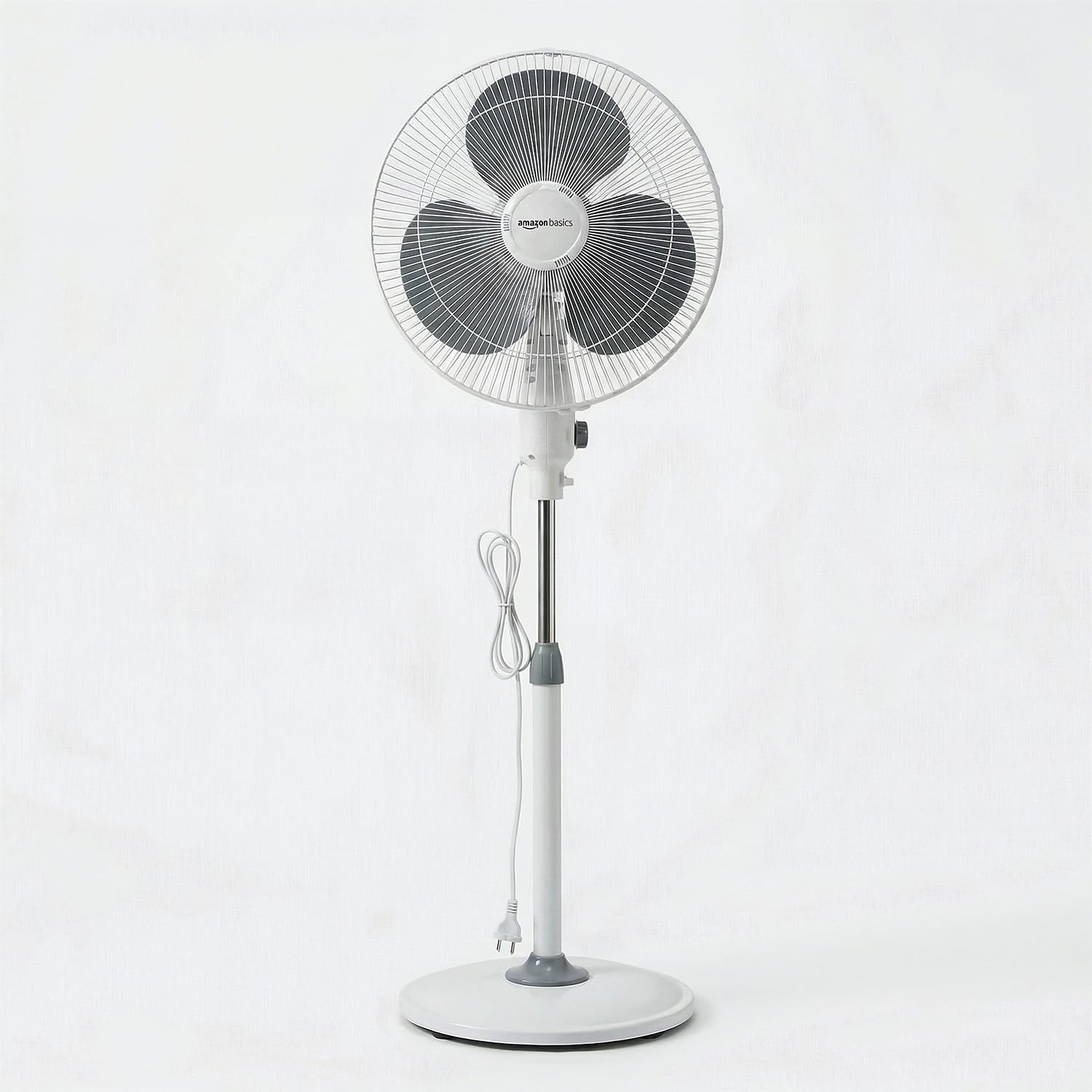
16-Inch Pedestal Fan | Tilting Head | 1400 RPM | Silent Operation | 400mm Sweep (Grey)
- ✅ Tilting head for adjustable airflow
- ✅ 1400 RPM — strong yet silent operation
- ✅ 400mm sweep for whole-room cooling
- ✅ Runs on a fraction of an AC's or cooler's units
Who Supplies Electricity in Ladakh?
Ladakh Union Territory is served by a single UT-run utility - PDD Ladakh (Power Development Department) - under LERC oversight, operating uniformly across both districts. A handful of remote hamlets in Zanskar and the Changthang plateau rely partly on diesel generators and solar micro-grids during winter, but the standard LERC-approved tariff applies UT-wide. Both districts are covered.
PDD Ladakh - Leh, Nubra Valley, Pangong & Nyoma
Power Development Department Ladakh's Leh division, headquartered in Leh town, powers the UT capital and the busiest tourist belt - Leh, Nubra Valley (Diskit, Panamik, Turtuk), Pangong, Nyoma, Chuchot, Hemis and Alchi - along with the highest density of hotel, homestay and administrative connections in the region.
PDD Ladakh - Kargil, Zanskar, Drass & Suru Valley
The Kargil division of the same PDD Ladakh utility covers Kargil town, the remote Zanskar valley, Drass (the "Gateway to Ladakh" and one of the coldest inhabited places in India), Suru Valley, Sankoo and the border area of Batalik - all billed on the identical LERC-approved UT-wide tariff.
Ladakh Electricity Tariff Rates 2026 - PDD Ladakh
These rates are approved by LERC (Ladakh Electricity Regulatory Commission) for FY 2025–26 and apply uniformly across PDD Ladakh in both Leh and Kargil districts. Ladakh offers a free electricity slab for the first 100 units per month for domestic consumers - a meaningful concession given how much households rely on electricity for winter heating at high altitude - beyond which a progressive telescopic tariff applies.
🏠 Domestic (LT-I) Consumer Slab Rates - 2026 ✅ First 100 Units FREE
| Units Consumed per Month (kWh) | Rate per Unit (₹/kWh) | Slab Amount (Example) |
|---|---|---|
| 0 – 100 units | ₹0.00 / unit (FREE) | Zero energy charge for this slab |
| 101 – 200 units | ₹4.50 / unit | Max ₹450 for this slab |
| Above 200 units | ₹7.00 / unit | Applies only to units beyond 200 |
📋 Additional Charges - Domestic 2026 (PDD Ladakh)
| Charge Type | Rate / Amount | Notes |
|---|---|---|
| Fixed Monthly Charge | ₹70 / month | Flat monthly charge for standard domestic connection |
| Meter Rent | ₹10 / month | For standard single-phase meter |
| FAC (Fuel Adjustment Charge) | ₹0.20 / unit | Applies to ALL units consumed, including the free slab; compensates PDD Ladakh for power purchase and winter diesel-backup cost variation |
| Electricity Duty | 5% of energy charges | UT duty calculated on energy charges only, so ₹0 during the free slab |
🏢 Commercial Consumer Slab Rates - 2026
| Units Consumed per Month (kWh) | Rate per Unit (₹/kWh) |
|---|---|
| 0 – 100 units | ₹5.00 / unit |
| 101 – 200 units | ₹6.50 / unit |
| Above 200 units | ₹8.00 / unit |
Commercial connections have NO free slab - billed from unit 1. Commercial fixed charge: ₹125/month. Meter rent: ₹15/month. FAC: ₹0.20/unit. Electricity duty: 5% of energy charges. Telescopic billing applies to commercial connections as well.
How to Calculate Your Ladakh Electricity Bill
Understanding how your Ladakh bijli bill is calculated helps you catch overcharges. Ladakh offers the first 100 domestic units FREE, then uses progressive telescopic billing - here's the exact PDD Ladakh method.
Read Your Meter
Note down the current meter reading. Subtract the previous month's reading to find units consumed. Your electricity bill also shows this directly as "Units Consumed" in kWh.
Apply Slab Rates (Free Slab + Telescopic)
Ladakh gives the first 100 units FREE (₹0), then bills telescopically: ₹4.50/unit (101-200), ₹7.00/unit (above 200). Only the units within each band are charged at that band's rate. Example: 150 units = ₹0 (first 100 free) + (50 × ₹4.50) = ₹225.
Calculate Electricity Duty
Electricity Duty = 5% × energy charges. If energy charges are ₹225 (150 units), duty = 5% × ₹225 = ₹11.25. Households within the 100-unit free slab pay ₹0 duty, since energy charges are ₹0.
Add FAC Adjustment
FAC (Fuel Adjustment Charge) = ₹0.20 × total units consumed - applied even within the free slab. It is revised periodically by LERC based on actual power purchase and winter diesel-backup costs.
Add Fixed Charges & Meter Rent
Fixed Charge = ₹70 per month + Meter Rent = ₹10 per month (domestic). Total fixed = ₹80 every month regardless of consumption - even households fully within the free slab pay this.
Sum = Total Bill
Total Bill = Energy Charges (after 100 free units) + Electricity Duty (5% of energy) + FAC (₹0.20/unit) + Fixed Charge (₹70) + Meter Rent (₹10). Check this against what's printed on your PDD Ladakh bijli bill for accuracy.
Electricity Bill Examples for Common Usage Levels
See exactly how much you'd pay in Ladakh for different consumption levels - 2026 PDD Ladakh domestic tariff. First 100 units FREE! Beyond that, telescopic billing at ₹4.50 and ₹7.00/unit applies.
Duty: ₹0
FAC: ₹10 + Fixed+Meter: ₹80
Duty: ₹0
FAC: ₹20 + Fixed+Meter: ₹80
Duty: ₹11.25
FAC: ₹30 + Fixed+Meter: ₹80
Duty: ₹22.50
FAC: ₹40 + Fixed+Meter: ₹80
Duty: ₹57.50
FAC: ₹60 + Fixed+Meter: ₹80
Duty: ₹92.50
FAC: ₹80 + Fixed+Meter: ₹80
Duty: ₹127.50
FAC: ₹100 + Fixed+Meter: ₹80
Duty: ₹197.50
FAC: ₹140 + Fixed+Meter: ₹80
⚠️ Approximate estimates based on official LERC 2025–26 Ladakh tariffs. First 100 units FREE for domestic consumers; telescopic slab billing applies beyond that. Fixed charges and FAC apply even within the free slab. Always verify with your official PDD Ladakh bill.
Advantages & Disadvantages of Ladakh's Slab Tariff System
Ladakh's tariff model is genuinely generous for low-consumption households with 100 FREE units - a real relief in a region where winter heating makes electricity a necessity, not a luxury. However, the steep jump to ₹7.00/unit above 200 units hits heating-heavy households hard through the long winter.
✅ Advantages of the Slab System
- First 100 FREE units every month - a meaningful concession that reflects how essential electricity is for heating and basic living at 3,000+ metres altitude, where winter temperatures regularly fall below -20°C.
- Telescopic billing means each slab rate applies only to units within that band, so crossing into a higher slab never retroactively increases charges on earlier units.
- The tariff structure is simple - just 3 domestic slabs (0-100 FREE, 101-200, above 200). Easy to understand and verify on your bijli bill.
- LERC applies a single uniform tariff across both Leh and Kargil districts, so the rate you pay is the same whether you're in Leh town or Kargil town.
- Despite the extreme cold, Ladakh has exceptional solar potential thanks to its high altitude and clear skies - among the highest solar irradiance anywhere in India. PM Surya Ghar subsidy is available to Ladakh consumers.
- LERC and PDD Ladakh are actively expanding grid reliability and solar micro-grids across remote high-altitude villages in both districts, reducing dependence on diesel generators.
⚠️ Disadvantages & Limitations
- The top slab rate of ₹7.00/unit above 200 units is a significant jump once the free slab is exhausted - and winter heating routinely pushes households well past 200 units for months at a time.
- FAC of ₹0.20/unit applies to every unit consumed, including within the free slab - so even a household using only 60 units still pays a small FAC charge each month.
- 5% electricity duty on energy charges only kicks in once you exceed 100 units, but scales up automatically as your slab climbs.
- Power supply reliability is a genuine challenge in Ladakh's remote high-altitude villages (Zanskar, Nubra, Changthang), where harsh winters, heavy snowfall, and long transmission distances can cause outages - some areas still rely partly on diesel backup.
- Long, severe winters (October-March) mean electric heater and geyser loads push many households past the free slab and into the ₹7.00/unit band for a large part of the year - unlike states where high consumption is a summer-only problem.
- The short construction and installation season (essentially May-September, before roads close) makes rooftop solar and infrastructure upgrades logistically harder than in most of India.
20 Proven Ways to Reduce Your Electricity Bill in Ladakh
Ladakh gives you 100 free units, but the long, severe winter (October-March) makes staying within that limit genuinely hard once electric heaters and geysers come on. These tips are tailored to Ladakh's extreme high-altitude cold desert climate and PDD Ladakh tariff structure.
Watch the 100-Unit Free Threshold
Ladakh's billing gives you the first 100 units completely free, then jumps to ₹4.50/unit and eventually ₹7.00/unit above 200. During Ladakh's long winter, limiting electric room heater runtime by even an hour or two a day can be the difference between staying in the free slab and crossing into the paid bands.
Switch to 5-Star Appliances
A 5-star AC uses up to 25–30% less electricity than a 2-star equivalent. BEE star ratings ensure you know the real consumption. When replacing old appliances, always check the energy label.
Replace All Bulbs with LED
LEDs use just 8–10 watts versus 40–60 watts for incandescent bulbs. If you replace 10 bulbs in your home with LEDs, you'll save roughly 300–400 units annually in Ladakh.
Go Solar - Ladakh Has Some of India's Best Solar Irradiance
Ladakh's high altitude and clear skies give it exceptional solar potential - often cited among the highest in India, even though winters are freezing. A 1kW rooftop system can generate strongly during the long sunny days of summer, and solar-passive building design (Trombe walls, south-facing glazing) is widely used in Leh to trap heat naturally. PM Surya Ghar subsidy (up to ₹78,000 for 3kW) is available to Ladakh consumers through PDD Ladakh.
Insulate Roofs and Walls Against Extreme Cold
Ladakhi homes lose enormous amounts of heat through uninsulated mud-brick or concrete walls and roofs during winters that regularly drop below -20°C. Adding insulation, double-glazed windows, and sealing gaps can cut heat loss dramatically, reducing how long electric heaters need to run each day.
Shift Heavy Appliances to Night
Run washing machines, geysers, and dishwashers in the evening or night (after 10 pm). It reduces simultaneous load in your home and prevents your circuit from tripping during peak afternoon hours.
Stop Phantom Load (Standby Power)
TVs, set-top boxes, chargers, and microwaves left plugged in keep drawing power even when idle. In a typical Indian home, standby power wastes 50–100 units per year. Use switchable power strips.
Use Room Heaters Efficiently, Not Constantly
Electric room heaters and blowers are the single biggest electricity consumers in Ladakh's winter. Use them only in occupied rooms, close doors to trap heat, and use a timer instead of leaving heaters running overnight - this alone can meaningfully cut winter heating costs.
Use Passive Solar Heating Design
Ladakh's intense daytime sun and cold nights make passive solar heating (south-facing windows, Trombe walls, greenhouse-attached rooms) highly effective and is already common in Leh's traditional architecture. It can noticeably cut how much electric heating you need, even in peak winter.
Use Solar Water Heaters
Electric geysers are a major winter electricity consumer in Ladakh, often running for months at a time. A 100-litre solar water heater costs ₹15,000–₹25,000 but can pay for itself faster here than almost anywhere else in India, given Ladakh's exceptional solar exposure during the long, clear summer days.
Use Geysers and Immersion Rods Wisely
Set geyser thermostats to a moderate setting instead of maximum, and switch off geysers at the wall (not just standby) once water is heated, since many keep drawing power to maintain temperature through the cold. This is especially impactful during Ladakh's long winter when hot water is needed daily.
Track Monthly Consumption
Read your meter every week, not just when the bill arrives. Spotting a spike early lets you investigate - a refrigerator compressor fault or a geyser left on can quietly add 100+ units in a month.
Ladakh Electricity Bill: Everything You Need to Know in 2026
Ladakh's electricity sector has a distinct history. Until 2019, Ladakh was part of undivided Jammu & Kashmir, and power was managed by the J&K Power Development Department. When Ladakh became a separate Union Territory in October 2019, its own Power Development Department, Ladakh (PDD Ladakh) was formed as the sole electricity utility, headquartered in Leh, with operations split across Leh and Kargil districts. Unlike most Indian states, Ladakh - being a Union Territory with no state legislature - is not divided into multiple regional DISCOMs; PDD Ladakh remains the single utility for the entire UT. As of 2026, PDD Ladakh operates under a domestic tariff approved by LERC (Ladakh Electricity Regulatory Commission).
Understanding PDD Ladakh and How Tariffs Are Set
The Ladakh Electricity Regulatory Commission (LERC) is the UT-level regulator that approves electricity tariffs for Ladakh. PDD Ladakh submits its cost structure and proposed rate revisions to LERC, which reviews and issues the applicable tariff order. The rates in this calculator reflect the most recent LERC order, effective for FY 2025–26 and carried forward into FY 2026–27.
FAC (Fuel Adjustment Charge) is separately notified by LERC and trued-up periodically. It reflects the gap between actual and approved power costs - relevant in Ladakh because several remote valleys still depend partly on diesel generator backup during peak winter, when hydropower generation from Ladakh's small run-of-river plants can drop. It currently works out to ₹0.20 per unit, applied uniformly across Leh and Kargil districts, including within the free slab.
Why Ladakh Bills Spike in Winter (October–March)
Unlike most of India where summer AC load drives peak bills, Ladakh's electricity consumption peaks during its long, severe winter (October to March), when temperatures in Leh regularly fall below -15°C and can drop past -30°C in Kargil district and remote areas like Drass and Zanskar. Households rely heavily on electric room heaters, blowers, and geysers to stay warm and to keep water from freezing. A single 2000W room heater running several hours a day can consume 300+ units a month by itself. Because the top rate of ₹7.00/unit kicks in above 200 units, sustained winter heating routinely pushes households out of the free slab and into the paid bands for months at a stretch - unlike states where high consumption is a brief summer problem. This is why insulation, efficient heater use, and passive solar building design make an outsized financial difference in Ladakh specifically.
Ladakh's Free Electricity Slab - What You Need to Know
Ladakh offers a genuine concession: the first 100 units of domestic consumption every month are completely FREE (₹0 energy charge), reflecting how essential electricity is for basic heating and living at high altitude. FAC (₹0.20/unit) and Fixed Charge (₹70) + Meter Rent (₹10) still apply even within the free slab, so the minimum monthly bill is never zero. Additional concessions may exist for BPL households and remote border-area connections - check your eligibility with your local PDD Ladakh sub-division office in Leh or Kargil.
How to Check Your Ladakh Electricity Bill Online
PDD Ladakh's billing information is available through the UT administration's official portal at ladakh.nic.in, and consumers can also check bills at their local PDD Ladakh sub-division office in Leh or Kargil. You need your Consumer Account (CA) Number printed on your current bill. Given connectivity challenges in remote valleys, many consumers in Ladakh still rely on in-person billing and payment, though online options are expanding.
Net Metering for Solar Users in Ladakh
Ladakh has one of the strongest solar resource profiles in India, thanks to its high altitude, thin atmosphere, and clear skies for most of the year - despite (and partly because of) its extreme cold. Consumers who install rooftop solar can apply for net metering under LERC regulations to export surplus electricity and get credit at the applicable tariff rate. Ladakh's UT administration has also been promoting large-scale solar and hybrid renewable projects (like the Hanle and Pang solar parks) to reduce dependence on diesel backup and costly power transmission from the plains. PDD Ladakh runs the net metering application process through your local sub-division office in Leh or Kargil.
Frequently Asked Questions - Ladakh Electricity Bill 2026
Answers to the most searched electricity billing questions from Ladakh consumers, covering tariffs, PDD Ladakh, billing disputes, solar, and more.
People Also Ask - Ladakh Electricity Bill
The most frequently asked follow-up questions from Google Search users about Ladakh electricity billing, answered with precision.
State-Wise Electricity Bill Calculators
Latest 2026 tariffs - pick your state for an accurate estimate
Each Indian state has its own electricity regulator and tariff slab structure. Our calculators are built from official tariff orders - not guesswork. Select your state below for an instant, slab-wise bill estimate.
Ladakh vs Other States - Electricity Bill Comparison
See how your Ladakh electricity bill stacks up against UP, Bihar, Delhi, Maharashtra and Gujarat at the same consumption level. All calculations use each state's official 2026 domestic tariff slabs.
Live State-by-State Bill Comparison
Adjust units consumed below - all 6 states update instantly
| State | Starting Rate | Top Slab Rate | Fixed Charge | Key Feature |
|---|---|---|---|---|
| 🏔️ Ladakh | ₹0/unit (100 free) | ₹7.00 (>200u) | ₹70/mo | First 100 units FREE, then telescopic PDD Ladakh tariff |
| ⚡ Uttar Pradesh | ₹3.50/unit | ₹6.50 (>500u) | ₹60/mo | Cheaper base, lower top slab |
| 🔌 Bihar | ₹0.00/unit (125 free) | ₹5.52 (non-telescopic) | ₹80/mo | Free 0-125 units, then flat rate on all units |
| 🏙️ Delhi | ₹3.00/unit | ₹8.00 (>400u) | ₹20/mo | Heavy subsidies apply; low base |
| 🌊 Maharashtra | ₹3.72/unit | ₹11.00 (>500u) | ₹100/mo | High top slab, high fixed charge |
| 🦁 Gujarat | ₹6.50/unit | ₹8.00 (>300u) | ₹55/mo | Moderate; DGVCL/PGVCL rates |
Ladakh Electricity Bill Calculator – How It Works
Everything you need to know - from inputs to slab math to final bill
About the Calculator
This tool calculates your Ladakh electricity bill using the official LERC (Ladakh Electricity Regulatory Commission) tariff slabs for 2025–26. It covers PDD Ladakh UT-wide (Leh district and Kargil district), which follow an identical unified tariff structure with the first 100 units FREE.
Unlike generic calculators, every charge component is computed separately: energy charges slab-by-slab (telescopic), electricity duty as 5% of energy charges, FAC on all units, and flat fixed/meter charges. This matches exactly how PDD Ladakh bills are generated.
- Telescopic slab billing - each unit priced at its own slab rate
- Covers domestic and commercial connection types
- Editable slab rates - test custom tariff scenarios
- Visual charts for slab cost breakdown and multi-unit comparison
- Works offline after first load - no server calls during calculation
Why LERC Tariff, Not Estimated Rates
Many online calculators use rounded or outdated per-unit figures. This calculator sources slabs directly from LERC's most recent tariff order. The current domestic structure - first 100 units FREE, then ₹4.50 and ₹7.00 per unit across two paid telescopic slabs - is verified against PDD Ladakh billing documentation.
FAC (currently ₹0.20/unit, applied even within the free slab) and Electricity Duty (5% of energy charges) are separately applied, as they appear on your actual bill. This gives you an estimate accurate to within 2–4% of your real PDD Ladakh bill - far more precise than flat per-unit calculators.
Last verified: 07 August 2026 · Source: LERC Tariff Order 2025–26
How to Use the Ladakh Electricity Bill Calculator
What Are Slabs in Electricity Billing?
Electricity slabs are consumption ranges, each with a fixed per-unit rate. Ladakh uses a free slab plus telescopic system - the first 100 units cost nothing, and beyond that, each slab rate applies only to units within that range. Your total consumption is never multiplied by a single rate.
A family using 80 units pays ₹0 in energy charges - fully within the free slab. A household using 250 units pays ₹0 for the first 100, ₹4.50 for the next 100, and ₹7.00 for the remaining 50 - not ₹7.00 across all 250 units.
The financial implication is significant: staying within 100 units means zero energy charge, and crossing the 200-unit threshold costs only the marginal rate on units beyond 200, not a blanket increase. This is why staying just below 100 and 200 units matters so much for Ladakh bills, especially in winter.
Ladakh 2026 Slab Structure (Visual)
Bar widths show relative rate - not unit count. Each slab is billed independently.
Example: How a 250-Unit Ladakh Bill Is Calculated
Here's a step-by-step breakdown for a domestic consumer who used 250 units in January 2026 in Leh district.
⚠️ Minor rounding differences (±₹2–5) may appear on your actual PDD Ladakh bill due to billing system precision.
Frequently Asked Questions
🌐 Multi-Language Support
The electricbillcalculate.in platform offers calculator pages in Hindi, Urdu, Malayalam, Tamil, Telugu, Kannada, and other regional languages - so consumers across India can read their bill breakdown in their preferred language without needing to translate.
🌙 Dark Mode & Theme Support
Switch between light and dark themes using the button in the top navigation. Your preference is saved to your browser's local storage and restored on your next visit - no account needed. Both themes are fully accessible with proper contrast ratios.
Preference saved locally - no cookies, no tracking.
Why Use This Calculator Over Others
Official Tariff Data
Built directly from LERC's 2025–26 tariff order. Not estimates - actual approved rates with correct slab boundaries.
Fully Editable Slabs
Change any rate, add slabs, or adjust fixed charges to model future tariff hikes or compare different scenarios.
Rich Visual Charts
Pie, bar, and line charts show your bill composition and how costs change across consumption levels - not just a number.
Mobile-First Design
Works perfectly on all screen sizes. No app download, no login - just fast, clean calculation on any device.
Zero Data Collection
Everything runs in your browser. No units data is sent to any server. Your usage figures stay completely private.
Regularly Updated
Tariff data is reviewed with every LERC tariff order. FAC changes, new slab announcements, and duty revisions are tracked and applied.
Important Note
This calculator provides an estimated bill based on the official LERC 2025–26 tariff slabs. Actual bills issued by PDD Ladakh or the other PDD Ladakh may differ slightly due to billing cycle rounding, mid-year FAC revisions, applicable category-specific concessions (BPL/Kutir Jyothi concession, free agricultural power, etc.), security deposit adjustments, arrears, or any special notifications issued after this page's last update.
Always treat this calculator's output as a close estimate - not an official bill. For billing disputes or tariff queries, contact your PDD Ladakh. PDD Ladakh: ladakh.nic.in · Helpline: 1912.
Ladakh Electricity Bill - Answered in Seconds
Direct answers to the most searched questions about Ladakh electricity tariff, PDD Ladakh, and bijli billing. Includes Ladakh's free-slab-plus-telescopic billing explained clearly.
As of 2026, Ladakh domestic tariff (PDD Ladakh) has the first 100 units FREE, then 2 paid telescopic slabs:
| Consumption | Rate (₹/unit) |
|---|---|
| 0 – 100 units | ₹0.00 FREE |
| 101 – 200 units | ₹4.50 |
| Above 200 units | ₹7.00 |
Source: LERC Tariff Order 2025–26. ✅ First 100 units free, then telescopic - each paid rate applies only to units within that slab.
Formula: Total Bill = Energy Charges (100 free, then telescopic) + Electricity Duty (5% of energy) + FAC (₹0.20 × all units) + Fixed Charge (₹70) + Meter Rent (₹10)
▸ Energy = 0 (free) + (100×₹4.50) = ₹450 (telescopic)
▸ Duty = ₹22.50 | FAC = ₹40
▸ Fixed ₹70 + Meter ₹10 = ₹80
▸ Total ≈ ₹592.50
FAC = Fuel Adjustment Charge. Currently ₹0.20 per unit. Added on ALL units consumed - including units within the free slab. Revised periodically by LERC based on power purchase and winter diesel-backup costs. Not subject to electricity duty. On a 200-unit bill, FAC adds ₹40.
Electricity Duty = 5% of energy charges (domestic) - not GST, not a flat per-unit levy. Zero if you stay within the 100-unit free slab, since energy charges are ₹0. Collected by PDD Ladakh on behalf of the Ladakh UT administration.
Covers: Leh town, Nubra Valley, Diskit, Panamik, Turtuk, Pangong, Nyoma, Chuchot, Hemis & Alchi
Covers: Kargil town, Zanskar, Drass, Suru Valley, Sankoo & Batalik
Sets a single uniform tariff for PDD Ladakh UT-wide - same rates across both districts
Ladakh Electricity Consumer Rights & How to File a Complaint
Under the Electricity Act 2003 and LERC regulations, Ladakh electricity consumers have legally enforceable rights. If your bijli bill seems wrong - especially regarding slab-wise billing errors - you have a clear escalation path.
Step 1: Contact Your PDD Ladakh
Call the PDD Ladakh helpline 1912 (toll-free, 24/7) or visit your local PDD Ladakh sub-division office. PDD Ladakh's official portal is ladakh.nic.in. They are required to respond within 15 days under LERC Consumer Grievance norms.
Step 2: Consumer Grievance Forum
If PDD Ladakh's resolution is unsatisfactory, escalate to the Consumer Grievance Redressal Forum (CGRF), mandated under the Electricity Act 2003. PDD Ladakh maintains CGRF offices in Leh and Kargil. File online or in person.
Step 3: PDD Ladakh Ombudsman
If CGRF fails, escalate to the LERC-appointed Electricity Ombudsman. File a petition through the LERC website. The Ombudsman can order bill corrections, refunds, and penalties for billing errors.
Your Key Rights as a Ladakh Electricity Consumer
Solar Rooftop & Net Metering in Ladakh - Complete 2026 Guide
Ladakh has some of the highest solar irradiance anywhere in India, thanks to its high altitude, thin atmosphere, and near-cloudless skies for most of the year - Leh and Kargil average well above 5.5–6.0 kWh/m²/day in summer. A well-sized rooftop solar system that shifts your consumption below the 100-unit free slab or out of the ₹7.00/unit top slab can save ₹300-800+ monthly. PM Surya Ghar subsidy up to ₹78,000 is available.
How Net Metering Works in Ladakh
When your rooftop solar system produces more electricity than you consume, the surplus units are exported to the PDD Ladakh grid. These exported units are credited to your bill at the LERC-notified feed-in tariff rate. Your monthly bill = Units consumed from grid × tariff rate minus export credit.
Net metering in Ladakh is available under LERC Net Metering Regulation and PM Surya Ghar. Exported units are compensated at the LERC-notified feed-in tariff. PDD Ladakh processes applications through local sub-division offices in Leh and Kargil - solar self-consumption is especially valuable for staying within the 100-unit free slab, or below the 200-unit threshold where the rate jumps to ₹7.00/unit. Installation is best planned for the short May-September window before winter road closures.
Net Metering Quick Facts - Ladakh 2026
Ladakh Electricity Tariff Revision History (2014–2026)
LERC revises tariffs periodically through its Tariff Order process. Here's how Ladakh's domestic electricity rates have evolved over the past decade.
Smart Meters & Prepaid Electricity in Ladakh - What You Need to Know
Under the Revamped Distribution Sector Scheme (RDSS), Ladakh is rolling out smart prepaid meters across Leh and major towns. Here's how it changes your bijli billing.
📟 What is a Smart Prepaid Meter?
A smart prepaid meter works like a mobile recharge - you top up before you consume. When your balance runs low, you receive an SMS alert. No more bill shock, no due dates to remember, and no disconnection for non-payment. The meter automatically cuts supply when balance reaches zero.
The same LERC-approved tariff applies to prepaid/smart meters - the first 100 units are still free, followed by the same telescopic slabs. Charges are deducted in real-time as you consume. The billing cycle changes from monthly to real-time, and you can track consumption daily via the PDD Ladakh app, where available.
Benefits of Smart Meters for Consumers
- Daily or hourly consumption visibility via app
- No estimated billing - only actual readings
- Instant low-balance SMS alerts
- Eliminates meter reading visits
- Faster fault detection by PDD Ladakh
📍 Rollout Status in Ladakh (2026)
PDD Ladakh has installed smart meters across Leh town and is in phased rollout across Kargil town and larger settlements in Nubra Valley. Remote high-altitude villages in Zanskar, Changthang, and Suru Valley are expected to see full smart meter installation later, given the logistical challenges of winter access and limited connectivity. Contact your local PDD Ladakh sub-division office to check rollout status in your area.
Rural vs Urban Electricity Billing in Ladakh
Many Ladakh consumers wonder if they're paying different rates based on whether they live in a city or village. Here's the definitive answer.
Surprising Ladakh Electricity Facts (That Affect Your Bill)
These statistics explain why Ladakh consumers face unique billing patterns - especially during the brutal winter months - and why the UT's free-slab, high-altitude tariff differs sharply from most of India.
🔥 Shareable Fact: Ladakh's Free Slab vs Winter Heating Reality
Ladakh gives domestic consumers 100 free units every month - genuinely generous by Indian standards. But a single electric room heater running through a Ladakh winter can consume 300+ units on its own, meaning many households burn through the free slab within weeks of the cold setting in and pay the full ₹4.50-₹7.00/unit rate for the rest of the winter. This is why insulation and passive solar heating matter so much here - not for saving money in summer, but for surviving winter within a manageable budget.
Ladakh Electricity Bill - Expert Guides & Insights
Go beyond the calculator. Our expert blog covers everything about Ladakh electricity billing - tariff history, saving strategies, PDD Ladakh zone details, and step-by-step guides for Leh, Nubra Valley, and Kargil consumers.
Ladakh Electricity Bill Calculator 2026 - Complete Guide to PDD Ladakh Tariff, Slabs, FAC & How to Reduce Your Electricity Bill
Everything you need to know about your Ladakh electricity bill in one place. We break down the PDD Ladakh 2025–26 tariff structure, explain how the free slab, FAC, fixed charges and electricity duty are calculated, cover the Leh vs Kargil district split, and give you 20 proven strategies to cut your monthly bill - especially during Ladakh's brutal winter months.
How to Calculate Your Ladakh Electricity Bill Step-by-Step
Manual slab-by-slab calculation with worked examples for 100, 200, 300 & 500 units.
Read →What is FAC? Why Your Ladakh Bill Varies Each Month
Fuel Adjustment Charge explained - how PDD Ladakh sets it quarterly and how it affects your bill.
Read →15 Proven Ways to Reduce Your Ladakh Electricity Bill in 2026
Room heater settings, insulation, solar, BEE star ratings - practical tips that actually cut costs.
Read →About This Calculator - Accuracy & Data Sources
This Ladakh electricity bill calculator is maintained by electricbillcalculate.in, a platform built to help Indian households understand and verify their electricity bills. All tariff data is sourced directly from the Ladakh Electricity Regulatory Commission (LERC) Annual Tariff Orders and official PDD Ladakh documentation.
The current rates (first 100 units FREE, then ₹4.50/₹7.00 per unit across 2 telescopic paid slabs) are from the LERC Tariff Order for Financial Year 2025–26, applicable UT-wide across both Leh and Kargil districts. FAC (₹0.20/unit) is verified against the LERC tariff order.
🔗 Official Resources & Regulatory Links
Our editorial team researches and verifies Indian state electricity tariffs directly from regulatory commission (ERC) orders and PDD Ladakh tariff schedules, updating each calculator whenever a new tariff order, FAC revision, or government subsidy scheme is notified.
About our editorial process →⚠️ Disclaimer: This calculator provides estimates only. Your actual PDD Ladakh bill may vary due to local surcharges, connection-specific charges, or tariff revisions not yet incorporated. Always verify with PDD Ladakh or the Ladakh Electricity Regulatory Commission.
Leh Electricity Bill Calculator 2026 - PDD Ladakh Tariff
Leh, Ladakh's capital, along with Nubra Valley, Pangong, Nyoma and Diskit, is served by PDD Ladakh's Leh division. The tariff structure is identical to the LERC-unified rate applicable across Kargil district too.
⚡ Leh Unit Rate 2026
- 🟢 0–100 units: FREE
- 🟡 101–200 units: ₹4.50/unit
- 🔴 Above 200 units: ₹7.00/unit
📍 Areas Under Leh District
Leh town, Nubra Valley, Diskit, Panamik, Turtuk, Pangong, Nyoma, Chuchot, Hemis, Alchi - all served by PDD Ladakh at the same UT-wide unified tariff. Pay bills or check status through your local PDD Ladakh sub-division office.
💡 Leh Winter Bill Tip
In peak winter (December-February), Leh's extreme cold pushes households well past 200 units with room heater and geyser use, moving a large share of consumption into the ₹7.00/unit top slab. Insulate rooms, use passive solar heating design, and consider a solar water heater to stay closer to the free slab.
Kargil Electricity Bill Calculator 2026 - PDD Ladakh Tariff
Kargil town, along with Zanskar, Drass (one of the coldest inhabited places in India), Suru Valley, Sankoo and the border area of Batalik, is served by PDD Ladakh's Kargil division. The tariff structure is identical to the LERC-unified rate applicable statewide. Contact your local PDD Ladakh office, or check the UT administration portal at ladakh.nic.in.
⚡ Kargil Unit Rate 2026
- 🟢 0–100 units: FREE
- 🟡 101–200 units: ₹4.50/unit
- 🔴 Above 200 units: ₹7.00/unit
📍 Areas Under Kargil District
Kargil town, Zanskar, Drass, Suru Valley, Sankoo, Batalik - all served by PDD Ladakh at the same unified tariff. Also see the main Ladakh electricity bill calculator above for the full breakdown.
❄️ Kargil's Extreme Winter
Drass, in Kargil district, is often cited as the second-coldest inhabited place in the world, with winter temperatures dropping below -30°C. Electric heating is essential for months at a time, and many households exceed the free slab quickly once winter sets in. Insulation and efficient heater use make a major financial difference here.
Try the Ladakh Electricity Bill Calculator Now
Enter your units and get a full Ladakh PDD Ladakh bijli bill estimate in under 10 seconds. See the exact free-slab-plus-telescopic breakdown for both Leh and Kargil districts - no guesswork. No login required.
⚡ Calculate My Bill